

3 Things with Opsis Architecture
Portland has an amazing sustainability community, and we want to highlight the people and work that shape our unique city. We’re sharing their answers to questions we posed.
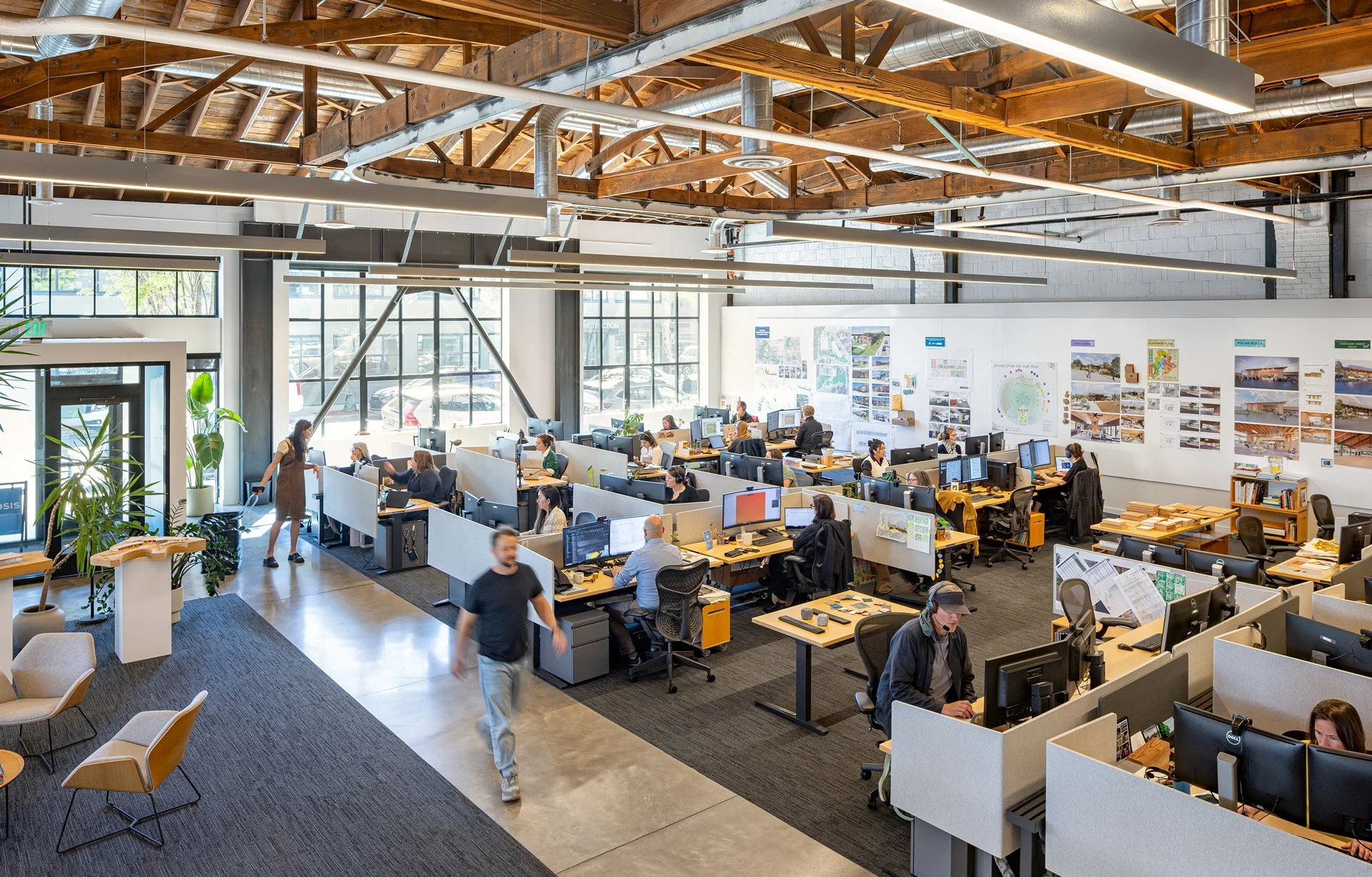
Opsis is a 60-person architecture, interiors and planning firm with a studio practice rooted in the guiding principle of collaborative “vision-making.” We strive for a design process and architecture that is open, inclusive, collaborative and respectful; reflective of the environment in which it resides and the community and culture for whom it is created.
Now, we’ll hand it over to Opsis to share their perspective on sustainability, Portland’s future, and the projects and collaborations that inspire them.
1. What does sustainability mean to you?
We think of sustainability as all the systems that support the long-term health and resilience of people, communities, climate, and planet.
Sustainability has been integral to our practice since Opsis was founded, but our understanding of it continues to evolve. Today, that means considering not only energy, water, carbon, and materials, but also resilience, equity, community participation, and the broader impacts design decisions have on people and ecological systems.
We look at sustainability through many interconnected facets, and those facets are evolving rapidly as resources, technologies, and the energy economy change. How do we get to net zero? How will the anticipated growth in electricity demand affect the decisions we make today? How do we design for resilience, equity, and long-term adaptability at the same time?
We use frameworks such as LEED and the Living Building Challenge to help clients articulate priorities, establish measurable goals, and explore what is possible. We also help clients test and implement new approaches, from reducing embodied carbon and making material sources more visible to advancing net-zero energy and regenerative design strategies.
That same commitment is built into our own practice through our Sustainability Action Plan, long-standing participation in the AIA 2030 Commitment, and leadership in efforts such as the Portland Materials Transparency Collaborative.
For us, sustainability is ultimately about creating places that can endure, adapt, and contribute positively to the communities and living systems they are part of.
2. Name a Portland (or Oregon) project or collaboration that has inspired you, and tell us why.
One recent project that has inspired our design teams is Portland State University’s ITECK Field Station and Oak Savanna. It is a small project asking very big questions about what a building can contribute to its place, its community, and the larger living systems around it.
The project is pursuing the Living Building Challenge while renovating an existing structure and restoring an oak savanna, creating a test bed for ideas around healthy materials, water, energy, habitat, and carbon. ITECK - Indigenous Traditional and Ecological Knowledge - is central to the project and represents ways of knowing, understanding place, and living in relationship with natural systems that long predate contemporary sustainability frameworks. Just as important is the collaborative nature of the work: PSU, Indigenous partners and knowledge holders, students, researchers, the design and construction teams, and community partners are learning together and challenging conventional approaches to design.
The project asks how design can restore ecological systems, support healthier material choices, create opportunities for learning, and generate benefits that extend beyond the project boundary. That shift, from doing “less bad” to contributing positively to place, is an important direction for the future of sustainable design.
3. What can Portland (or Oregon) be doing better to be more sustainable?
Portland has been a national leader in sustainability for decades, but the next opportunity is to move beyond minimizing harm and toward a more regenerative model. What if Portland became a national example of a “Nature Positive” city, beginning with a commitment to make every City project nature positive?
Portland could establish requirements for publicly funded projects that go beyond conventional green-building performance: first avoiding net ecological loss, and then demonstrating measurable ecological gain. Projects could be asked to increase habitat value and native biodiversity, expand tree canopy, improve soil and stormwater function, reduce bird collisions and nighttime light pollution, and strengthen connections between fragmented natural systems. Over time, those individual projects could become part of a larger network of restored habitat and ecological infrastructure woven throughout the city.
Projects like PSU’s ITECK Field Station point toward what this could look like. Sustainability would no longer be measured only by how much less energy, carbon, water, or material a project consumes, but also by what it gives back. Portland already has the knowledge, values, and creative community to lead this next evolution and help define what a regenerative city can actually look like.