

3 Things with Brit Sastrawidjaya
Portland has an amazing sustainability community, and we want to highlight the people and work that shape our unique city. We’re sharing their answers to questions we posed.
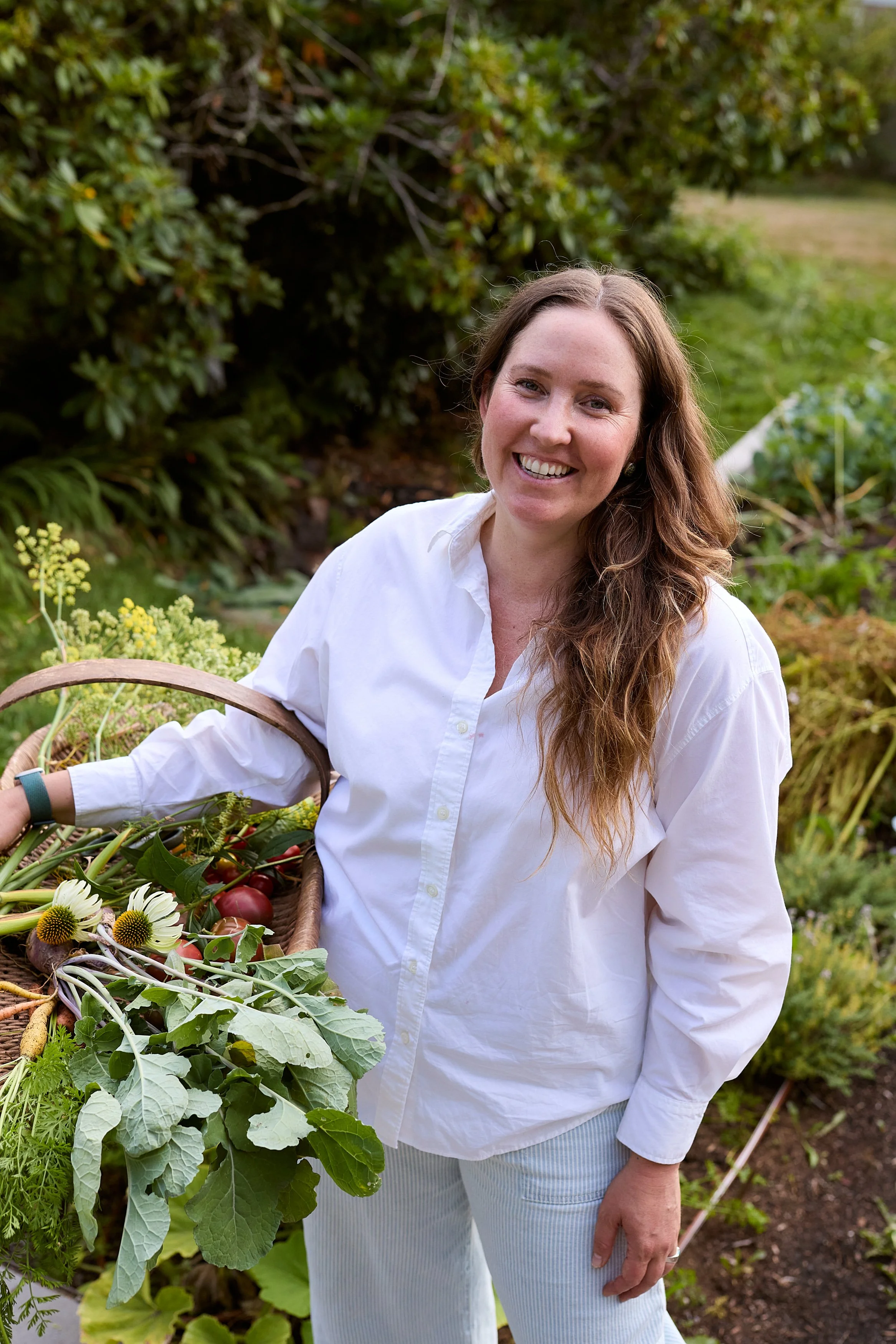
Meet Brit Sastrawidjaya. Brit is the CEO and Founder of Blueprint Earth, a regenerative landscape design and construction firm focused on restoring ecological function through thoughtful land stewardship. Her work emphasizes soil health, stormwater management, native ecosystems, and long-term regeneration over conventional landscaping practices.
Through Blueprint Earth, Brit developed the company’s Regenerative Standard, a framework centered on improving water systems, soil biology, habitat, materials, and overall landscape performance. She is passionate about helping builders, designers, and property owners rethink landscapes as living systems that can sustain and heal themselves over time.
Brit believes sustainability should go beyond reducing harm and instead focus on actively restoring ecological systems. Her work reflects a commitment to regenerative design practices that help reconnect the built environment with the natural world.
Now, we’ll hand it over to Brit to share her perspective on regeneration, ecological landscaping, and the future of sustainable development in Oregon.
1. What does sustainability mean to you?
For me, sustainability has never been about doing less harm. It's about actively healing.
The landscape industry has spent decades applying toxic solutions to the land: synthetic fertilizers that degrade soil biology, drainage systems designed to move water off a property as fast as possible, construction practices that treat the earth as something to manage rather than something to support. The result is a maintenance treadmill most property owners never see coming until they're already on it.
What I care about is regeneration. Every project we take on at Blueprint Earth is evaluated against a specific framework we call the Regenerative Standard. It covers water, soil, plants, materials, habitat, and process. The goal on every one of those dimensions is the same: leave that land healthier than we found it.
When we get it right, the system starts sustaining itself. That's what sustainability looks like to me: not maintenance of the status quo, but restoration of something that works, drawing it closer to nature.
2. Name a Portland (or Oregon) project or collaboration that has inspired you, and tell us why.
A Wilsonville project stays with me.
The site was fully destructed. A new home had been built into a hillside, and by the time we came in, the land had been stripped of everything. The client's immediate concerns were practical: keep water away from the foundation, fix the drainage so the lawns weren't perpetually soggy. Standard stuff on the surface.
But what we actually had was a blank slate and a real opportunity to do it right from the beginning.
We started with water, the way we always do. That means a site-specific stormwater assessment before a single plant gets specified. On a hillside, water doesn't ask permission, so we designed intentional swales to move it through the site intelligently, slowing it, filtering it, directing it away from the foundation rather than just chasing it off the property. Then we turned to the soil, which construction had compacted and depleted. We rebuilt it through compost and mulch layering, inoculated with mycorrhizae as standard practice, and committed to a multi-year restoration program that would compound over time.
The design itself moves between formal and naturalistic. There's a pool and pool house, structured moments that feel refined. As you move toward the property edges, it softens into the surrounding native landscape.
The most important decisions happen before the first plant goes in. Grading, water, soil biology: get those right, and everything else follows.
We put those principles into a document called the Blueprint Earth Regenerative Standard, which we share freely with clients and project partners. Happy to pass it along.
3. What can Portland (or Oregon) be doing better to be more sustainable?
So much of this comes down to getting the right people in a room early. Builders, architects, landscape designers and architects, civil engineers: when those conversations happen at the beginning of a project rather than after the grading plan is already done, everything changes.
One of the things I spend real time on is talking with that group about what's possible when a stormwater code requirement becomes a rain garden instead of a drywell. Most projects bury the water underground and call it solved. But that's not the only card on the table. It's just become the standard of care, and most people don't realize there's another option.
When you bring the right people together early, you can make a case that works on every level. For builders, there's a genuine ROI potential worth considering. For freshwater resources, a well-designed rain garden can meaningfully reduce the amount of irrigation a landscape requires long-term. And for ecological systems, it allows landscapes to thrive with far less input from human interference. The water does the work. The soil biology takes over. The plants establish and hold.
I genuinely believe people want to do good. They just don't know this is possible. Once they see it, the conversation changes quickly.
Oregon has the talent, the native plant material, and the cultural appetite to lead on this. What we need is for ecological thinking to become part of the standard conversation at the design table. The knowledge exists. We just need to raise the expectation.